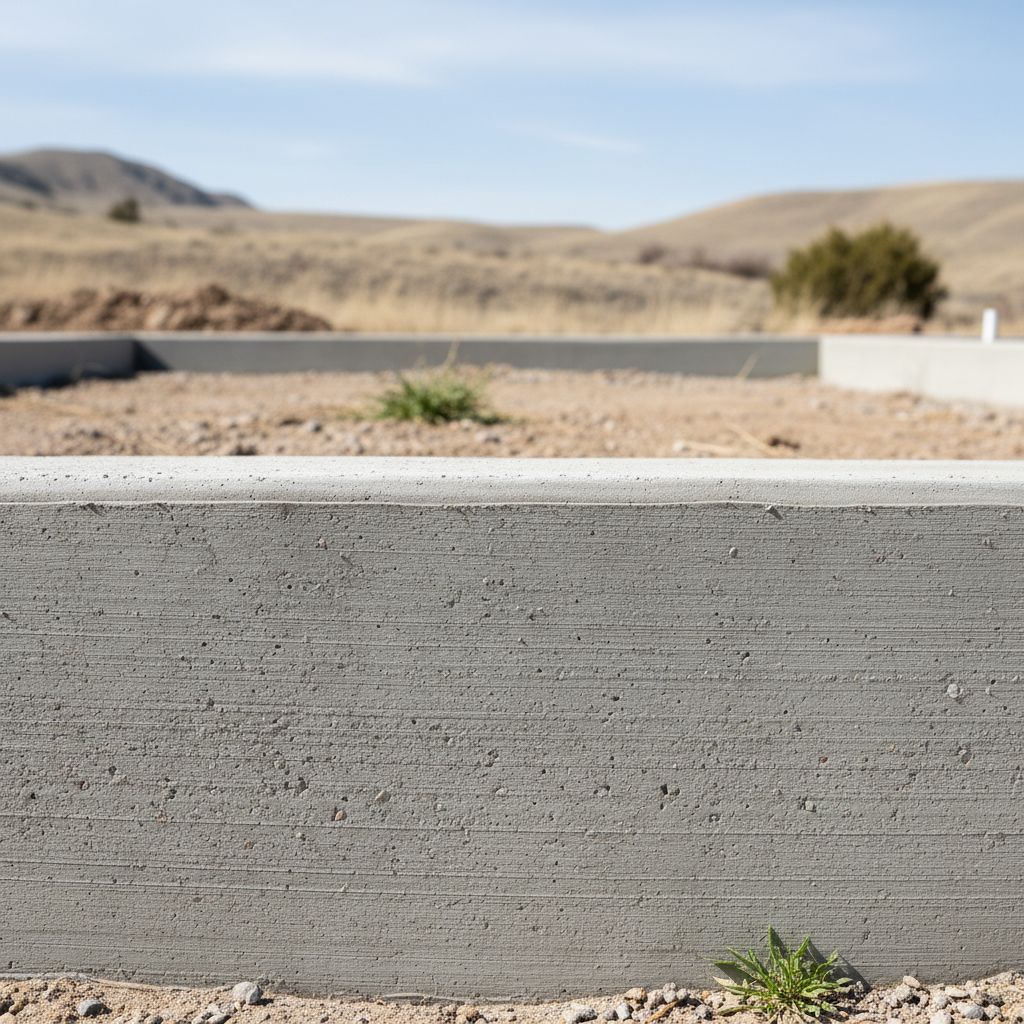
Building a solid structure starts way below the surface, especially here in Riverton where our local soils can range from heavy valley clays to coarse alluvial fans near the foothills. If you are planning an addition, a detached garage, or a new outbuilding, getting the foundation right from day one saves you from headaches down the road. Charis Concrete Solutions walks through what you actually need to know before, during, and after the pour, and where you should draw the line between do-it-yourself effort and professional muscle.
Before the Pour: Ground Prep and Planning
You cannot rush the prep work. If you skip steps here, your concrete will pay for it through shifting, cracking, or uneven settling over the winter freeze-thaw cycles. First off, you need to look at your specific plot. Properties closer to the eastern side of town deal with moisture-reactive soils, while western lots near the mountain front might run into rocky ground or hardpan layers.
Here is what you can handle yourself during the planning phase:
- Clearing surface vegetation, roots, and topsoil from the building footprint.
- Pulling the necessary local permits and checking utility lines before any digging starts.
- Mapping out your surface drainage to make sure water will flow away from the new structure.
When it comes to the heavy excavation, deep trenching for frost protection, and bringing in engineered road base, that is where Charis Concrete Solutions steps in to make sure the subgrade is compacted to tight specifications.
During the Project: Forms, Rebar, and the Pour
Once the excavation is square and solid, formwork goes up to dictate the exact shape and elevation of your concrete. This stage requires precision. If your forms are out of square by even a fraction of an inch, framing your walls later on becomes a major problem.
Steel reinforcement is another area where shortcuts will cause failure. Standard residential builds need properly spaced rebar tied securely to keep the concrete locked together when the ground shifts. When the ready-mix truck shows up, the clock starts ticking immediately. Pouring, screeding, and floating a foundation requires a crew that moves fast and knows how to handle the mix before it starts to kick off. Trying to place a large foundation pour as a weekend do-it-yourself project with a couple of friends is a recipe for a cold-jointed, weak structure.
After the Pour: Curing and Care
The truck leaves and the surface looks finished, but the process is not quite over yet. Concrete does not dry—it cures through a chemical reaction that needs moisture and time. In our dry Riverton summers, fresh concrete can dry out too fast and develop surface crazing or deep shrinkage cracks.
Keep these post-pour rules in mind:
- Keep the concrete moist by spraying it down or covering it with curing blankets for at least the first several days.
- Stay off the fresh foundation for a couple of days, and wait at least a week before stacking heavy loads or framing on top of it.
- Backfill carefully once the concrete has reached sufficient strength, making sure not to slam heavy equipment against green walls.
For homes and businesses in Riverton, Charis Concrete Solutions provides Concrete Contractor services.