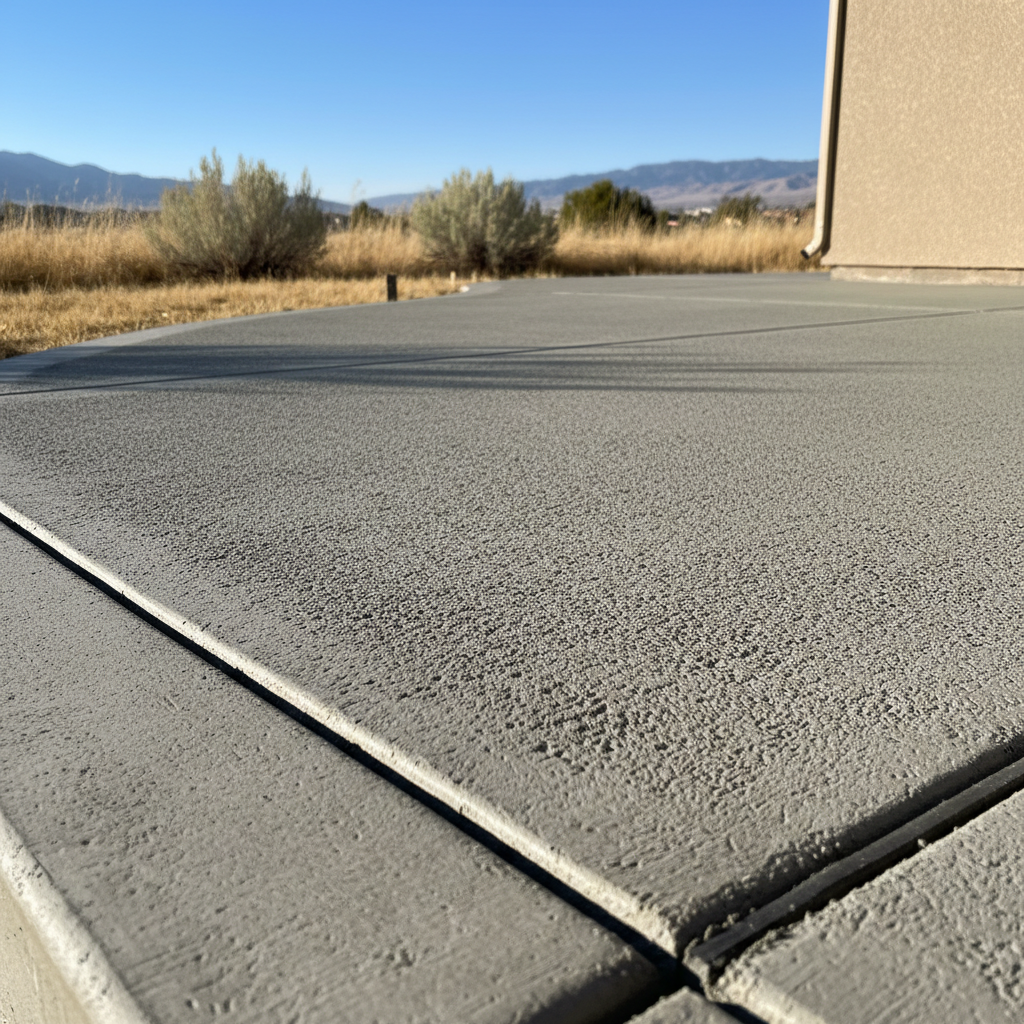
Looking at an old, cracked backyard slab can make a homeowner wonder how hard it is to rip it out and pour a fresh one. Flatwork looks deceptively simple. Spending years working on properties across Riverton, UT has taught Charis Concrete Solutions that concrete is less forgiving than almost any other material around your house.
Before you rent a mixer and start buying bags at the hardware store, we need to break down what actually goes into a successful flatwork project. You will need to look at preparation, the pour day itself, and what happens after the forms come off.
What You Can Realistically DIY
Tackling a small backyard project on your own can save you some cash if you know your limits. You can handle demolition of a small, thin slab with a rented electric breaker. Hauling chunks of old concrete to the dump in a trailer is hard physical labor, but it does not require specialized trade skills.
You can also handle basic site cleanup, digging out shallow areas for a simple garden pathway, or spreading road base gravel. If you are pouring a tiny stepping-stone pad or a small backyard fire pit base that is not attached to your home, go for it. You learn by doing.
When to Call a Pro
The moment your project involves a driveway, a garage floor, or a patio attached directly to your house, you are playing a different game. Here in Riverton, we deal with wild temperature swings and heavy clay soils in neighborhoods near the foothills and down toward the valley floor. If your subgrade is not compacted right, or if you miss the key grading slope, water will pool against your foundation or freeze and heave your new investment.
Charis Concrete Solutions sees DIY projects fail because a homeowner tried to hand-mix twenty bags for a large patio, ran out of steam before finishing the screed, and ended up with cold joints and an uneven surface that cracks by the next winter. Large pours require a concrete truck, a coordinated crew, and precise timing during the bull floating and edging stages. If you miss your window, the concrete sets up on you, and you are left with a permanent mess.
Before the Pour: Preparation Matters Most
Good flatwork starts long before the truck shows up. You have to strip away the topsoil down to stable ground. In our area, pouring concrete right over native clay is a recipe for disaster. Charis Concrete Solutions typically lays down several inches of crushed gravel sub-base and compacts it thoroughly. Formwork has to be dead-on level or pitched properly away from your home foundation so water drains correctly.
During and After: The Finishing Stages
On pour day, everything moves fast. Concrete waits for no one. You screed the top flat, work the aggregate down, and apply control joints to give the slab room to crack where you want it to, rather than randomly across the middle. Once it is finished, curing is everything. Do not just let it dry out in the hot Utah sun. Keep it moist or sealed so it achieves its proper compressive strength.
If you have got a big vision for your outdoor space, give us a ring at Charis Concrete Solutions. We will make sure the heavy lifting, grading, and pouring are done right the first time.