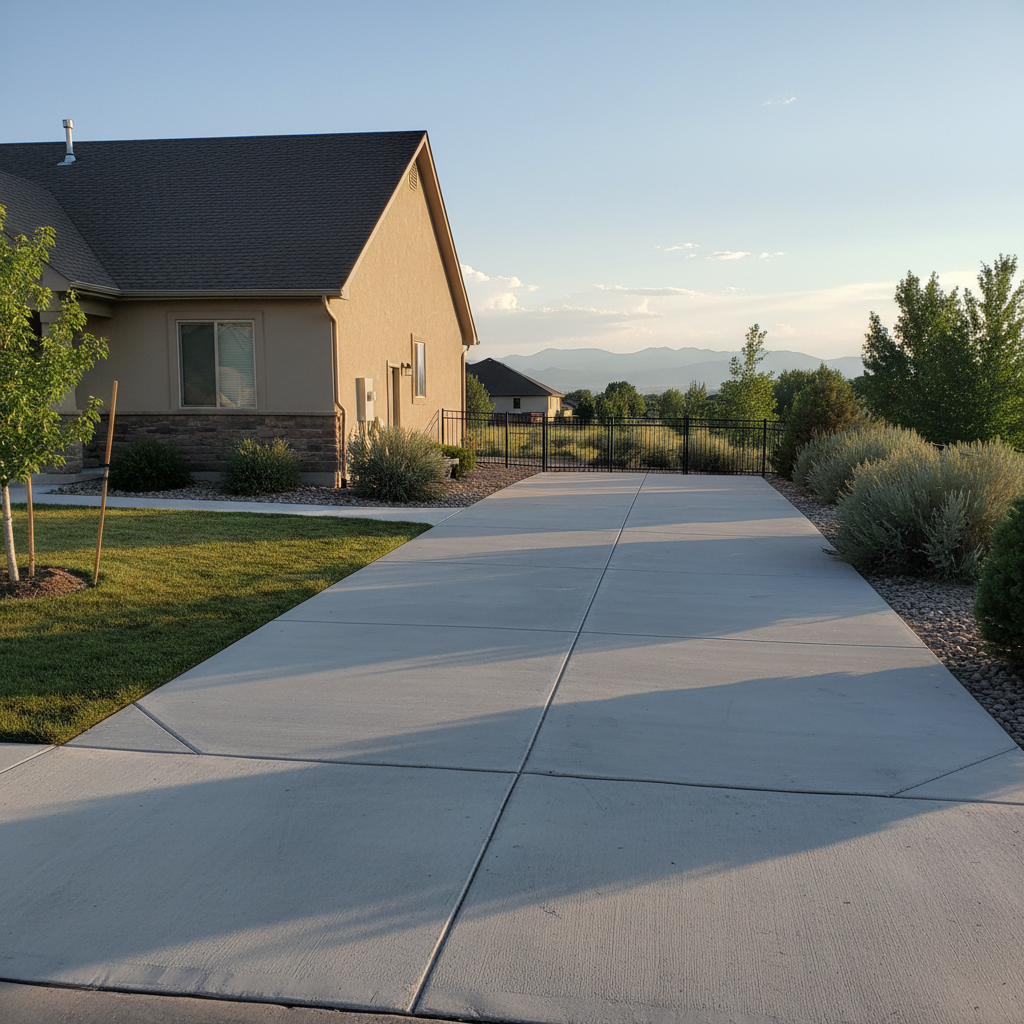
Concrete flatwork takes a beating around here. Between the baking summer sun in the Salt Lake Valley and those brutal winter freezes that drop right down into the teens, concrete has a tough job. If you live off 12600 South or out near the river bottoms, you already know local clay soils love to shift and move. That movement puts serious stress on driveways, walkways, and patios. This guide walks through exactly how to keep concrete flatwork solid for years without wasting money on gimmicks.
How to Extend the Life of Your Concrete
Keeping water out is an important priority for concrete. Water gets into microscopic pores, freezes, expands, and pops the top right off the surface. That is why sealing is very important around here. Homeowners want to apply a breathable, penetrating sealer every 2 to 3 years. Do not wait until the concrete looks worn out. If water stops beading on the surface, it is time for another coat. Also, skip the rock salt in January. That material accelerates surface scaling faster than almost anything else. Grab a bag of calcium chloride or safe-melt products instead to clear front steps.
What Regular Maintenance Actually Looks Like
Nobody wants to spend every weekend maintaining concrete, but routine upkeep goes a long way. Keep concrete flatwork clean. Sweep off dirt, leaves, and lawn clippings because they hold moisture against the surface. When using a hose or pressure washer, go easy on the pressure. Blasting concrete with 3,000 psi will strip the cream right off the top and expose the aggregate. Twice a year, walk the property and check the control joints. Those grooves are built to crack intentionally, but they also collect dirt and weeds. Pull the weeds out and fill any failing joints with a flexible polyurethane caulk before winter hits.
Warning Signs You Should Not Ignore
Small cracks happen. It is just a fact of life when the earth shifts under a driveway. But when a hairline crack turns into a wide split where one side is higher than the other, a settlement issue is present. Watch out for pooling water after a rainstorm too. If a puddle is sitting right in the middle of a back patio for days, the sub-base has likely washed out or compressed. Spalling, where the surface starts flaking off in little flakes or chunks, means moisture trapped underneath is trying to break free.
When It Is Time to Call a Professional
Some things can be knocked out on a Saturday afternoon with a tube of caulk and a broom. Other times, professional backup is required. If driveway slabs have dropped 4 inches near the garage apron, mudjacking or foam jacking is usually required to lift them back up safely. Charis Concrete Solutions sees plenty of DIY fixes gone wrong where homeowners poured regular patching compound over a structural failure. If the concrete is crumbling away completely or there is widespread sinking, call Charis Concrete Solutions. Charis Concrete Solutions tells homeowners straight whether a repair will hold or if a fresh pour is needed to keep the property safe.