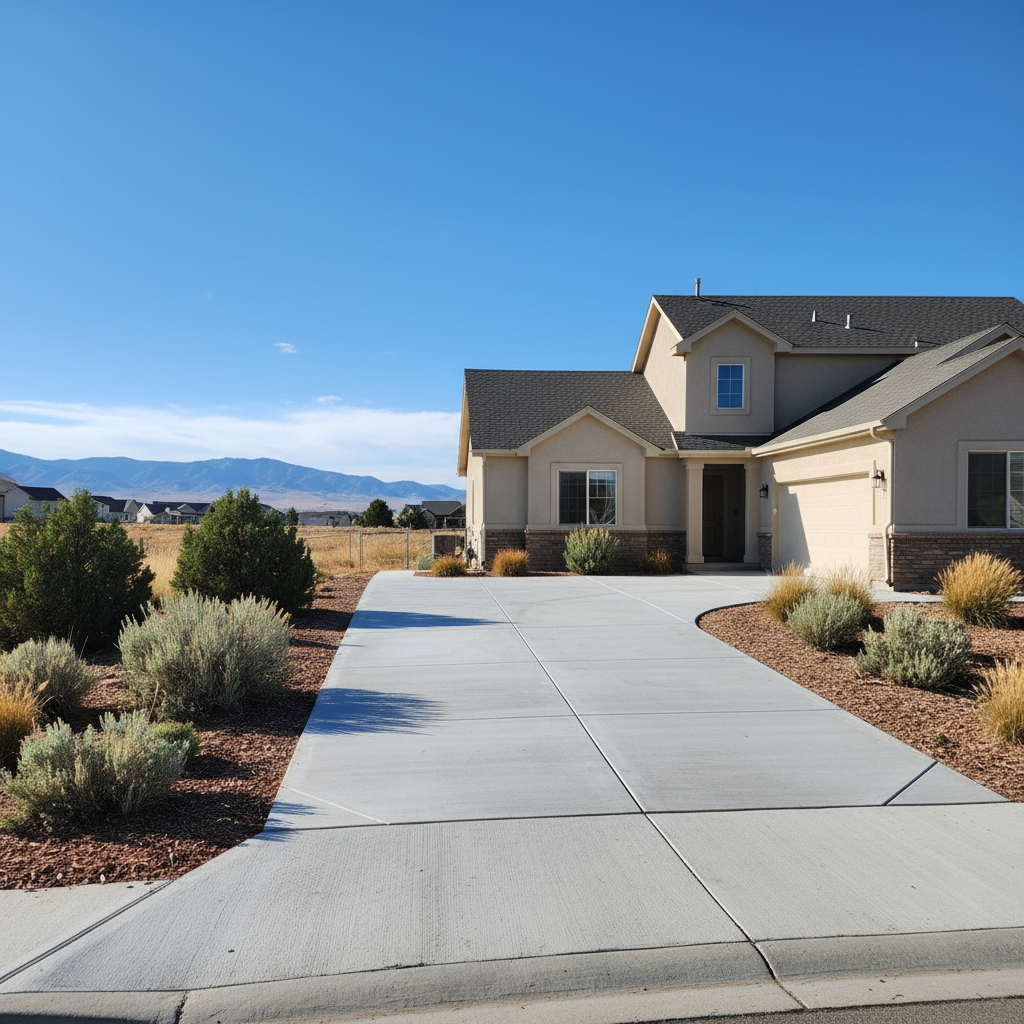
Alright, let's talk concrete. You're thinking about a new patio, maybe a wider driveway, or finally getting rid of that cracked walkway. The first thing on your mind, naturally, is probably, "How much is this going to cost me?"
It's a fair question, and one I get asked all the time. As a local concrete guy right here in Riverton, I've seen a lot of projects, and I can tell you that while there's no one-size-fits-all answer, I can give you a pretty solid idea of what to expect. No pun intended, but I'm a concrete guy, so it's hard to avoid.
What Makes Concrete Cost What It Costs?
A lot of folks think concrete is just concrete, but there are several big factors that really drive the price up or down. Understanding these will help you make sense of any quote you get.
- Project Size and Thickness: This is the most obvious one. More square footage means more material and more labor. Driveways, for instance, typically need to be thicker (4-6 inches) than a patio (4 inches) to handle vehicle weight. A 1,000 sq ft driveway is going to cost more than a 200 sq ft walkway, plain and simple.
- Site Preparation: This is huge. If your yard needs a lot of grading, old concrete removal, or extensive excavation, that's going to add to the cost. Sometimes we hit really rocky soil, like what you find in some of the older parts of Riverton near the mountains, and that makes digging tougher and more time-consuming. Good prep is crucial for a long-lasting slab, so don't skimp here.
- Concrete Mix Design: Standard concrete is fine for many things, but some projects need a higher strength mix (measured in PSI) or specific additives for things like freeze-thaw resistance – which we definitely need here in Utah with our winters. Colored concrete or stamped concrete also fall into this category, requiring special materials and more skilled labor.
- Accessibility: Can we easily get our trucks and equipment to the pour site? If we have to pump concrete over a house or wheelbarrow it a long distance, that adds significant labor and equipment costs.
- Finishing Touches: A basic broom finish is the most economical. Exposed aggregate, stamped patterns, or specialty finishes like polished concrete take more time, skill, and sometimes special tools, increasing the price per square foot.
Typical Concrete Installation Costs in Riverton, UT
I'm going to give you some realistic ranges for common projects. Remember, these are estimates based on what I've seen with Charis Concrete Solutions and other reputable contractors in the area. These prices generally include basic site prep, materials, labor, and a standard broom finish.
- Standard Concrete Patio or Walkway (4 inches thick): You're usually looking at **$8 - $12 per square foot**. For a 200 sq ft patio, that's $1,600 - $2,400.
- Standard Concrete Driveway (4-6 inches thick): Expect to pay **$9 - $14 per square foot**. A 500 sq ft single-car driveway could run $4,500 - $7,000. For a larger, 1,000 sq ft two-car driveway, you're in the $9,000 - $14,000 range.
- Colored Concrete (patio, walkway, driveway): Adding color typically bumps the price up by **$1 - $3 per square foot** over standard concrete.
- Stamped Concrete (patio, walkway, driveway): This is where things get more artistic and labor-intensive. You'll often see prices from **$14 - $25+ per square foot**, depending on the complexity of the pattern and color work.
- Concrete Removal & Disposal: If you have old concrete that needs to go, budget an additional **$2 - $5 per square foot** for removal and haul-away. This can vary quite a bit based on how thick and reinforced the old concrete is.
Keep in mind, these are for projects of a reasonable size. Very small jobs (under 100 sq ft) might have a higher per-square-foot cost because there's a minimum amount of setup and travel time involved for any crew.
What Should Be Included in Your Quote?
When you get a quote, make sure it's detailed. A good quote from Charis Concrete Solutions, or any other pro, should clearly spell out:
- Total Square Footage: Confirm the measurements.
- Thickness of Concrete: 4 inches? 5 inches? 6 inches?
- PSI of Concrete: Standard is usually 3000-3500 PSI for residential.
- Reinforcement: Will they use rebar, wire mesh, or fiber mesh?
- Site Preparation: What exactly is included? Grading, gravel base, old concrete removal?
- Finish Type: Broom, smooth, exposed aggregate, stamped pattern?
- Expansion/Control Joints: How and where will they be placed to prevent random cracking?
- Sealing: Is a sealer included, and if so, what kind?
- Clean-up and Disposal: Who handles the mess?
- Permits: Is the contractor responsible for pulling any necessary permits (though for many residential concrete jobs, you might not need one in Riverton, it's good to ask).
If a quote is just a single number with no breakdown, be wary. You want to know exactly what you're paying for.
How to Avoid Overpaying for Concrete
Nobody wants to get ripped off. Here's my advice:
- Get Multiple Quotes: This is a no-brainer. Get at least three detailed quotes from different contractors. It helps you compare apples to apples.
- Check References and Reviews: See what other people in Riverton are saying. A good track record speaks volumes.
- Don't Automatically Go for the Cheapest: The lowest bid often means corners are being cut, either in materials, prep work, or experience. Concrete is a long-term investment; you want it done right the first time.
- Ask Questions: If something in the quote isn't clear, ask. A good contractor will take the time to explain things to you.
- Understand the Scope: Make sure everyone is quoting on the exact same project. If one contractor includes extensive grading and another doesn't, their prices will naturally differ.
Investing in concrete is a big deal for your home. You want a durable, good-looking product that lasts for decades. By understanding these factors and doing your homework, you'll be able to make a smart decision and get a fair price for your concrete project right here in Riverton.