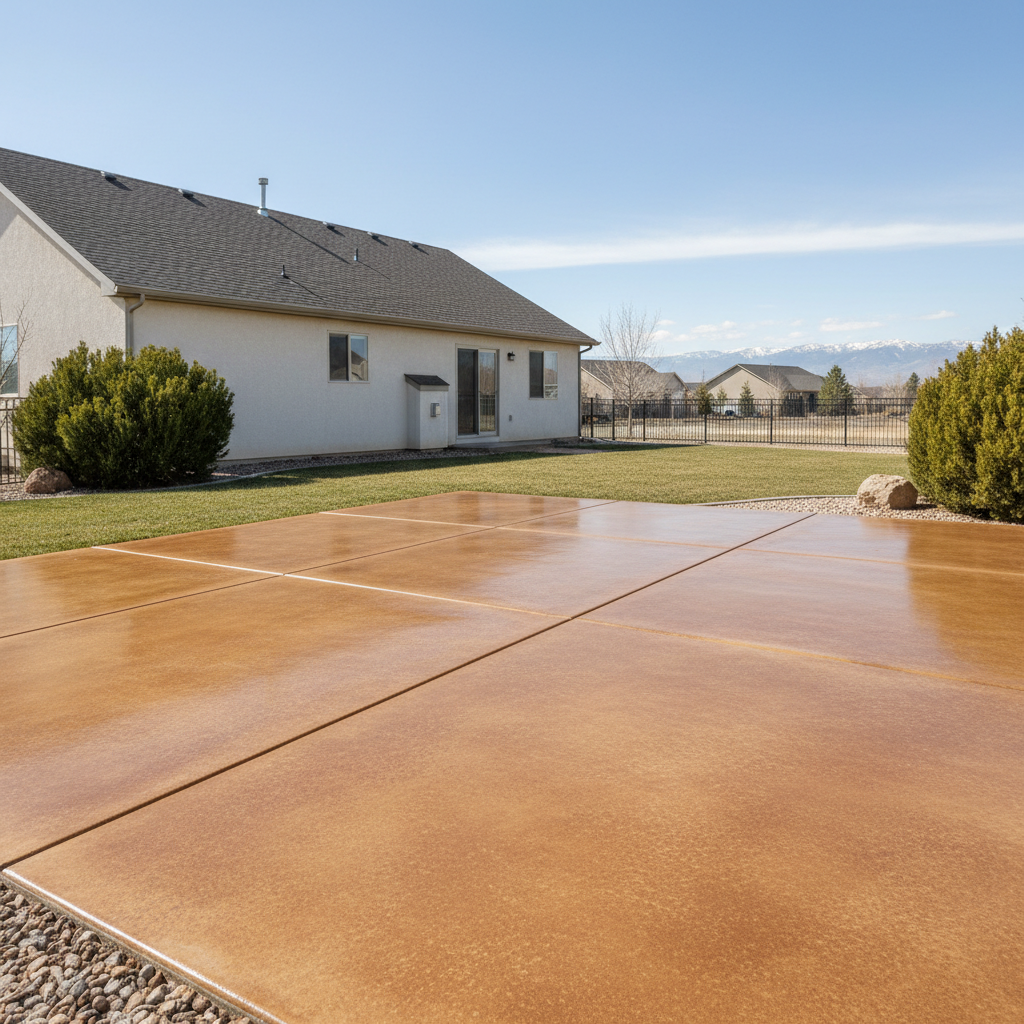
So, you've got some sweet stained concrete, maybe it's your basement floor, a patio, or even a pathway. It looks awesome, right? That rich color, the unique finish – it adds a ton of character. But here in Riverton, our weather can be pretty brutal on just about anything outdoors, and even indoor concrete needs a little love to stay looking sharp. You want that investment to last, and I'm here to tell you how to make it happen.
Extend the Life of Your Stained Concrete
The biggest thing you can do to extend the life of your stained concrete, especially outdoors, is proper sealing. When we stain concrete, we always apply a high-quality sealer afterward. This isn't just for shine; it's the protective barrier against everything Mother Nature throws at it. For outdoor surfaces, like a stained patio in your backyard in Rose Creek, I usually recommend a more durable, often acrylic-based, sealer that can handle UV rays and temperature swings.
Indoors, you might have a different type of sealer, like an epoxy or urethane, especially if it's a high-traffic area. The key is knowing what kind of sealer you have. If you're not sure, give us a call at Charis Concrete Solutions, and we can help you figure it out. Re-sealing is crucial. For outdoor concrete, you're probably looking at re-sealing every 2-3 years, sometimes even annually if it gets a lot of sun and foot traffic. Indoor floors might go 5-10 years, depending on wear and tear. Don't wait until it looks completely dull and worn; catch it before it gets to that point.
Regular Maintenance: It's Easier Than You Think
Keeping your stained concrete clean is the simplest form of maintenance. For indoor floors, a dust mop or a soft broom works wonders for daily upkeep. For spills, wipe them up quickly. Use a pH-neutral cleaner – think mild soap and water – and a soft mop. Avoid harsh chemicals, ammonia, bleach, or anything abrasive. Those can strip the sealer and dull the finish pretty fast.
Outdoor stained concrete needs a bit more muscle. Sweep off leaves, dirt, and debris regularly. When it's time for a deeper clean, a pressure washer on a low setting (no more than 1200-1500 PSI) with a fan tip is your friend. Just be careful not to hold it too close or blast away at one spot, or you could damage the sealer. Again, a mild, pH-neutral cleaner is best. Rinse thoroughly afterward. And hey, if you've got a grill on your stained patio, make sure to clean up grease splatters right away. Those can really etch into the sealer if left too long.
Another thing to consider, especially with our snowy Riverton winters, is de-icing agents. Most rock salt and de-icers are terrible for concrete, stained or not. They can corrode the surface and break down the sealer. Try to use sand or a concrete-safe de-icer if you absolutely need something for traction. Better yet, just shovel promptly.
Warning Signs You Shouldn't Ignore
Your concrete will tell you when it needs attention. Here are a few things to watch out for:
- Dullness or Fading: If your vibrant color starts looking washed out, especially in high-traffic areas or sun-exposed spots, your sealer is probably wearing thin.
- Scratches or Scuffs: Minor surface scratches are normal, but if you're seeing deeper marks that go through the color, the protective layer is gone.
- Peeling or Flaking: This is a clear sign the sealer is failing. It might look like clear flakes coming off the surface.
- Increased Absorbency: If water beads up less and soaks into the concrete more quickly than it used to, your sealer isn't doing its job anymore.
- Cracks: Small hairline cracks can happen, especially with our freeze-thaw cycles. But if they're growing or you see spalling (surface flaking), that's a bigger issue.
When to Call a Professional
Look, I'm all for DIY, but some things are best left to the pros. If you're seeing significant peeling, widespread fading, or deep cracks, it's time to call someone like Charis Concrete Solutions. We can assess the damage, figure out if it's just a re-seal job, or if it needs more extensive work like stripping and re-applying the stain and sealer.
Also, if you're unsure about what type of sealer you have or what product to use for re-sealing, give us a shout. Using the wrong product can cause more problems than it solves. We've got the experience and the right tools to get your stained concrete looking fantastic again, and more importantly, protected for the long haul. Don't let a small issue turn into a big, expensive headache.